Twenty-Eight Characters, Sixteen Locations, One Matrix
- Claudia Wingle
- Jun 28
- 2 min read
Updated: Jul 7
ODIE takes place over one day. It shot over fifteen. That gap is where continuity goes to die, and it is the reason the most important document in prep was not the script. It was the matrix.

Here is the problem in plain terms. The story follows Owen "Odie" Harper across a single day in Austin, sunrise to curfew. The camera does not get to shoot that day in order. Scenes from the same story hour landed weeks apart on the schedule. So the prep system started with a breakdown of all twenty-eight characters, each one carrying its own wardrobe, props, hair and makeup, and continuity notes. On top of that sat a per-character workbook, and on top of that a master matrix tying every character to every scene to every shoot day.
The crown jewel was a document called the Odie HMU Continuity Timeline. Twenty-four distinct physical states of the lead across one story day, from "clean shaven, healthy, happy" in the flashbacks all the way to "first night safe." Sweat, grime, injuries, exhaustion, each state pinned to specific scenes so that any given morning, the team knew exactly which version of Odie was walking on set.
The matrix earned its keep on the humans, too. Dean Stanfield worked every single day of the shoot. Roderick McDaniel, playing Mr. Anderson, had four days of work spanning a twelve-day gap in the middle. Edwina Thompson's Angela carried a black eye across two shoot days separated by a weekend. Seventeen actors worked exactly one day each, which means seventeen chances to get a costume or a prop wrong with no second visit. None of that survives fifteen days on vibes. It survives on a grid.
Then there were the locations. Sixteen of them, and when the locations document went to version one, only five were locked. Seven were confirming. Four were flat TBD. How the rest got locked says everything about how this film was made.
Three of the sixteen were penciled in as Nick's own properties, friendly territory with zero location friction. The board moved, the way boards do, but the instinct held: the dream sequences shot at his actual house, on his actual street, and the movie is better for it.
One location was a cast member's home. Mathew Mitchell, who plays Gerald, lent his house to become Angela's interiors.
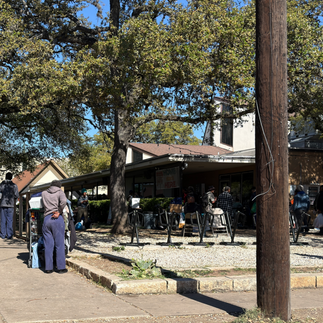
And two came from the real world the film depicts. Sunrise Homeless Navigation Center and Trinity Center are working service providers in Austin, and both came aboard as production partners rather than rented backdrops, with real say in how their community appears on screen and paid background roles for people from that community. Nick put the philosophy in one line in an email to Sunrise that spring: "Filming with you, not just at you, was always the version we wanted."
Five locked became sixteen locked. The matrix held. Next post, the last in the series: the Day One welcome letter, and how you prepare a crew to tell this particular story.




Comments